


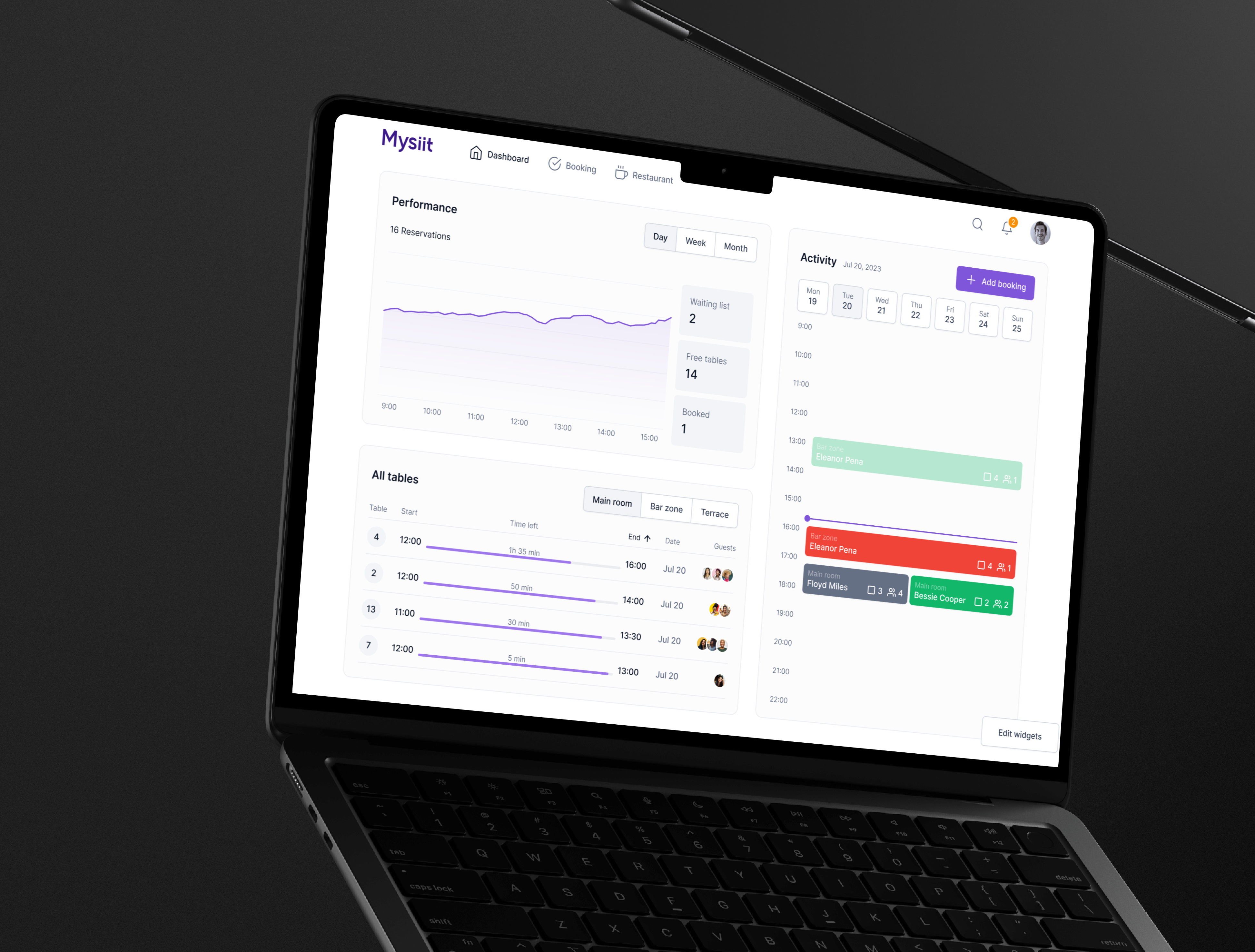
Hospitality SaaS
Mysiit
A working product that created friction at every step. We rebuilt the information architecture and redesigned the full interface around how restaurant staff actually think and work.
From product discovery and complex user flows to interface design, testing and implementation support.
Working with SaaS, AI and complex digital products — from an early idea to a scalable system.
Strong functionality is not enough if people cannot understand the product, find what they need or complete important tasks with confidence.
When decisions are based on assumptions, every stakeholder review introduces another direction. We validate the foundations early, so iterations become more focused as the project progresses.
As products grow, unclear navigation and structure make valuable functionality difficult to discover.
Without documented patterns and a flexible design system, every major update becomes another expensive rebuild.
A technically capable product can still struggle when users do not understand what to do, why it matters or how to reach the desired outcome.
01
Users understand the product and know what to do next.
02
Product decisions are supported by research, product logic and validation.
03
Reusable patterns and systems help the experience scale without losing clarity.
04
Teams receive clear, tested and implementation-ready designs.
A connected process that turns product questions into clear, testable and implementation-ready decisions.
01
We align business goals, user needs, product constraints and existing evidence before defining the solution.
Stakeholder interviews · Analytics review · Competitive research · Product requirements
02
We organize user flows, content and product structure around how people understand and use the product.
User journeys · Key scenarios · Navigation · Information architecture
03
We turn product logic into testable flows before investing in detailed interface design.
User flows · Wireframes · Interactive prototypes · Product logic
04
We create a clear visual language and reusable components that can grow with the product.
Interface design · Components · Responsive states · Design system
05
We validate critical scenarios, identify friction and improve the experience before development or release.
Test plan · User sessions · Findings · Prioritized refinements
06
We work with the development team, review implementation and help the product maintain its quality after launch.
Developer handoff · Design QA · Implementation support · Post-launch improvements
Every product starts at a different point.
We adapt the process to the problem, existing research, product maturity and your internal team. The six steps above describe our system of working — not a fixed package with the same deliverables for every client.
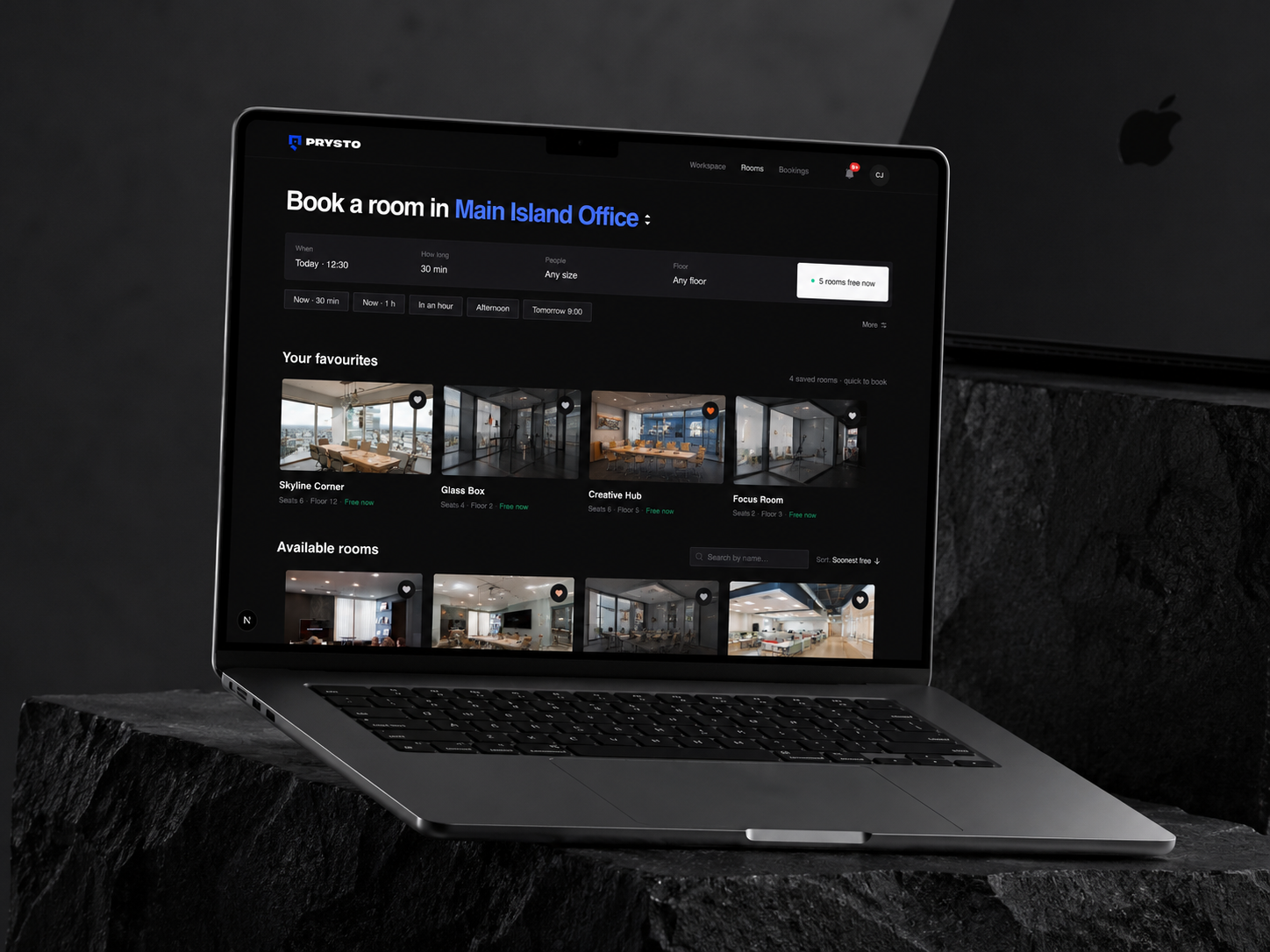
Hospitality SaaS
A working product that created friction at every step. We rebuilt the information architecture and redesigned the full interface around how restaurant staff actually think and work.
AI Product
An AI-powered workspace that needed a product strategy and a confident interface — something that made the technology feel clear and trustworthy, not complex.
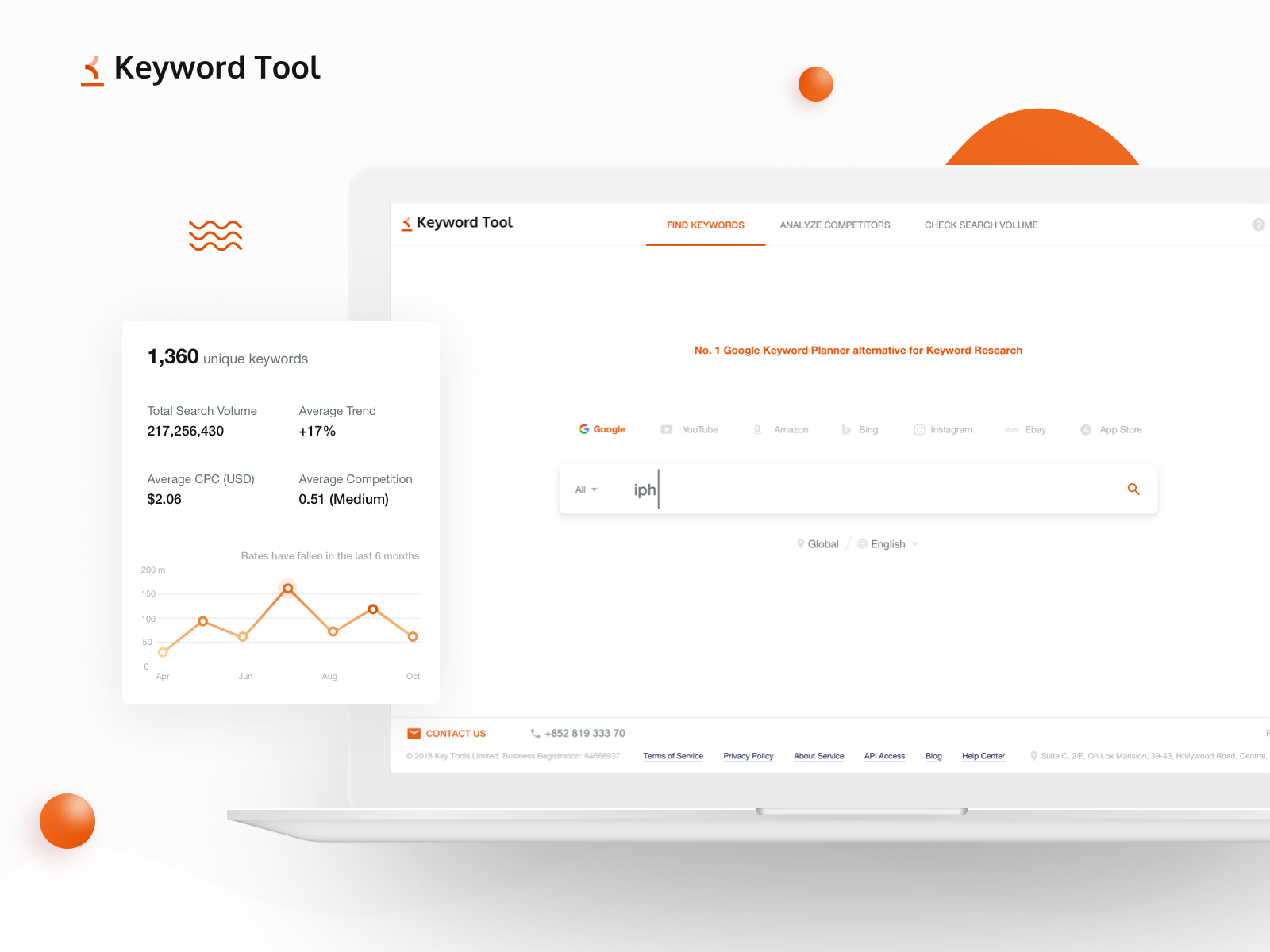
SaaS · SEO Platform
A powerful product with too many features and no clear structure. We ran a full UX audit, restructured the information architecture and redesigned the platform interface.
Shape, validate and design a new product before committing to full development. Define the concept, test the critical flows and arrive at development with a clear, validated direction.
Discuss your MVPSolve one defined product problem, critical flow or feature with a clear scope and outcome. Structured, time-boxed, and focused on what actually needs to change.
Discuss your projectA senior product designer inside your team, moving the product forward every week. For teams that need consistent design capacity without the overhead of a full-time hire.
Let's talkMostly SaaS, AI products and complex digital products — from early-stage startups that need to validate an idea, to established teams working on product improvements, redesigns or specific product challenges. We work best when there is a real product problem to solve, not just a visual update.
Yes — improving existing products is a significant part of our work. We start by understanding what is working and what is getting in the way, then focus on the specific flows, sections or structural issues that matter most. We don't redesign for the sake of it.
Yes. We're used to working alongside product managers, developers and internal stakeholders. We adapt to your team's process, communicate clearly and make sure everything we deliver is ready for the development team to implement.
It depends on the project. Some engagements start with a discovery phase that includes stakeholder interviews, analytics review and competitive research. For others, we work with existing research and product knowledge. We define the right approach based on what the project actually needs — not a default list of deliverables.
For product design projects, we typically deliver design files and developer handoff materials, and support the development team during implementation. For websites and marketing pages, we can build directly in Webflow or Framer.
It depends on the project scope, but typically: design files, interactive prototypes, a design system or component library, documented user flows and handoff materials for development. For projects with a testing phase, you also receive findings and prioritized improvements.
It depends on scope and complexity. A focused product sprint can take two to four weeks. A full product design cycle — from discovery through design system and testing — typically takes two to four months. We'll give you a clear timeline once we understand the project.
Pricing depends on scope, deliverables and the format of engagement. We don't publish fixed packages because projects vary significantly. Share what you're working on and we'll come back with a clear estimate.
Let's identify what is getting in the way and define the right next step.
Discuss your product